Introduction to Corn cob Playground Fillers
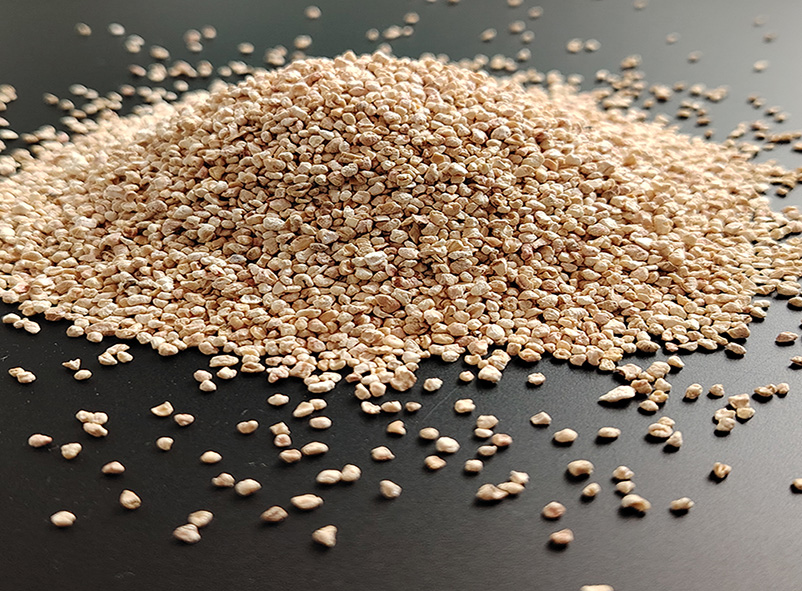
Corn cob infill is a sustainable, biodegradable, and organic material made from processed corn cobs. It is an eco-friendly alternative to rubber or plastic infill, offering excellent shock absorption, cooling properties, and stability. This natural infill enhances safety and comfort on artificial turf, especially in sports fields like football. It can reduce the need for additional shock-absorbing layers or shock pads while providing a natural appearance and a stable playing surface. Corn cob infill is an environmentally friendly choice that promotes safety and sustainability in sports field applications
Key Aspects of Corn Cob Infill:
Performance & Safety: Provides a, natural, and soft, surface for athletic fields, reducing injury risk.
Sustainability: It is an organic, bio-based material that acts as a sustainable alternative to micro-plastics.
Environmental Control: It can be used for evaporative cooling in hot climates and is biodegradable.
Material Properties: Corn cob particles are often ground to a specific size (0.5 to 7 mm). They can be combined with other materials like rubber granulate or moisture-retaining agents.
Other Applications: Beyond turf, processed corn cobs are used as industrial absorbents, filler in bio-polymers (PLA), and as a filler material in traditional construction
Implementation & Maintenance
Installation: Can be used on both soccer and multi-use games area (MUGA) fields, with some systems using it on top of water-holding sub-bases.
Performance: Provides excellent traction, comfort, and, in some cases, allows for a thinner, more cost-effective shock-absorbing layer underneath.
Maintenance: Similar to other organic infills, it requires regular brushing to maintain optimal performance.
Durability: While durable, it is an organic material, so it will degrade over time, but it offers a more sustainable choice.
Corn cob infill is a viable, high-performance option for modern, ecoconscious, and safe athletic surfaces.