Applications of Brown Fused Alumina Supplier (BFA)
In the vast landscape of industrial materials, where high-tech composites and advanced ceramics often capture the headlines, a rugged, unassuming workhorse continues to form the bedrock of modern heavy manufacturing and surface engineering. Brown Fused Alumina (BFA), a man-made abrasive grain with a characteristic brown hue, is experiencing a quiet renaissance. Its unique combination of toughness, durability, and cost-effectiveness is not only sustaining traditional applications but also enabling new frontiers in sustainable practices and advanced material processing. This is the story of how a foundational material is evolving to meet the challenges of the 21st-century industry.
The Anatomy of a Workhorse: Why Brown Alumina Endures
At its core, Brown Fused Alumina is produced in a submerged electric arc furnace at temperatures exceeding 2000°C, where bauxite is fused with small amounts of coke and iron. The resulting ingot is crushed, sized, and magnetically separated to produce grains of exceptional hardness (9.0 on the Mohs scale). What truly distinguishes BFA from its purer cousin, white fused alumina, is its intentional impurity: a 1.5-3.5% content of titanium oxide (TiO₂). This forms titanium-rich phases within the crystal structure, acting as toughening agents. The result is a grain that is less brittle, more impact-resistant, and better suited for high-pressure applications. This "tough love" makes it the go-to abrasive for jobs where sheer grinding force, not just finesse, is required.
Traditional Strongholds: The Backbone of Bulk Material Removal
BFA legacy is built in the gritty environments of heavy industry.
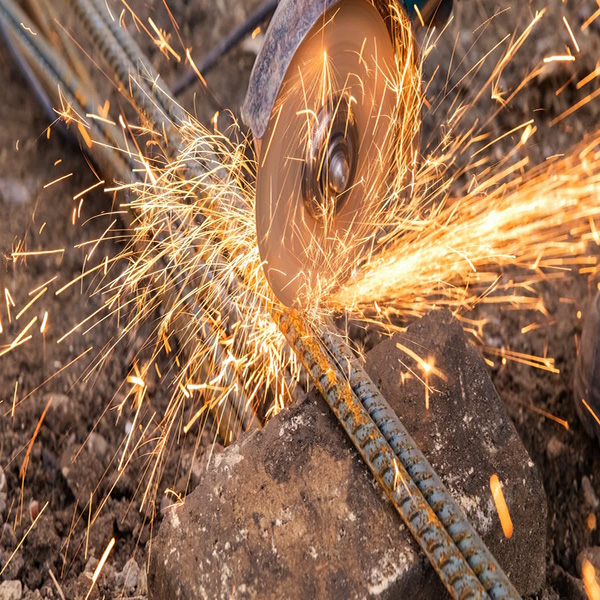
Abrasive Tools: It remains the dominant grain in heavy-duty grinding wheels and cutting-off discs used on steel fabrication shops, foundries, and shipyards. Its ability to withstand the immense pressure of grinding down welds, castings, and billets without premature fracture translates directly into longer tool life and lower cost-per-hour of operation.
Coated Abrasives: In the form of sandpaper and fiber discs, particularly for dry sanding applications on metal and wood, BFAs sharp, blocky fractures provide an aggressive initial cut and consistent performance, making it a staple in automotive repair and woodworking.
Blasting & Cleaning: As a blast media, brown alumina has become a responsible successor to silica sand. Its superior hardness allows for efficient removal of tenacious rust, scale, and old coatings from structural steel, bridges, and tanks, while its durability ensures recyclability, reducing waste and the health hazards associated with silicosis.
Forging New Frontiers: Applications Driving Modern Demand
Beyond its traditional roles, BFA is finding critical applications in emerging and evolving sectors.
The Renewable Energy Infrastructure Boom: The global push for wind energy has created a surge in demand for massive components like gearbox housings, flanges, and tower sections. The pre-treatment and weld preparation of these enormous steel castings and forgings rely heavily on BFA-based abrasives for their robust and efficient material removal. Its toughness is perfectly matched to the scale and demands of this industry.
The Refractory Anchor: In steelmaking, BFA is a fundamental raw material for monolithic refractories, such as castables and gunning mixes used in ladles, runners, and tundishes. Its high refractoriness, good volume stability, and appropriate reactivity with molten slag help extend lining life, directly improving the economics of steel production. This application consumes a significant volume of the material globally.
Recycling and Circular Economy: In scrap metal processing yards, preparing ferrous scrap for electric arc furnaces requires efficient de-coating and cleaning. BFA blasting offers an effective, environmentally sound method to remove paint, rubber, and contaminants from end-of-life vehicles and machinery, facilitating higher-quality recycled steel.
Functional Fillers and Composites: Engineered into polymer composites, BFA enhances properties for specialized applications. It is used in anti-skid floor coatings, friction materials for brakes, and wear-resistant liners for industrial equipment, leveraging its hardness to impart durability and traction.
The Sustainability Calculus: Durability as a Green Metric
In an era focused on ESG (Environmental, Social, and Governance) principles, BFA inherent properties contribute to sustainable manufacturing. Its long service life in abrasive tools and recyclability in blasting operations reduce raw material consumption and waste generation. By enabling efficient metal recycling and extending the lifespan of critical refractory linings in energy-intensive industries, BFA plays an indirect but vital role in reducing the overall carbon footprint of industrial processes. The industry itself is responding with more efficient furnace technologies and improved processing methods to lower the energy intensity of BFA production.
Market Evolution: The Demand for Precision and Consistency
The market is no longer satisfied with generic brown alumina. End-users are driving a shift towards higher-value, application-specific grades.
Consistent Grain Geometry: For precision abrasive tools, a tightly controlled grain size distribution (according to FEPA or ANSI standards) is paramount to ensure uniform cutting performance and surface finish.
Lower Magnetic Content: Advanced machining of aerospace alloys or precision components demands BFA with minimal free iron (Fe₂O³) to prevent metallic contamination of the workpiece. Special low-iron grades are now commonplace.
Process Integration: Leading suppliers are evolving into solution providers, offering technical support on optimal grain selection, blending, and application techniques to maximize productivity for their customers.
Challenges and the Path Forward
The BFA industry faces headwinds, including volatile energy and raw material (bauxite) costs and stringent environmental regulations governing production emissions. The future lies in continuous innovation and specialization.
Microstructural Engineering: Research is focused on further tailoring the crystal structure and toughening mechanisms to create grains for even more specific alloy families or grinding conditions.
Hybrid and Bonded Solutions: Combining BFA with other abrasive grains or advanced bonding systems in tools to achieve unique performance profiles is a growing trend.
Digitalization and Traceability: Implementing digital quality control and providing batch-specific certification (CoA) are becoming standard to assure performance in critical applications.
Conclusion: The Indispensable Foundation
Brown Fused Alumina may lack the glamour of cutting-edge nanomaterials, but its role is irreplaceable. It is the abrasive that shapes the skeletons of our infrastructure, cleans and prepares metals for a second life, and withstands the infernos of basic industry. As global manufacturing strives for greater efficiency, sustainability, and precision, this rugged, brown grain is adapting and evolving. It is a prime example of how a mature, foundational material can continuously reinvent itself, proving that in the world of industry, true toughness—both in material and in market position—never goes out of style. Its story is one of resilience, reminding us that the backbone of progress is often made of the simplest, yet toughest, stuff.